
Liberty Township City Directory Holdings
Liberty Township is best researched through a mixed shelf of Delaware City, Delaware County, taxpayer, and rural-route material. It is not a continuous township street-directory jurisdiction. A Liberty entry may sit in a county, taxpayer, or township portion instead of a street sequence. That distinction matters because a listing can place a person in the county without proving a modern street address or a complete household.
| Collection | Years | Where held | Access |
|---|---|---|---|
| Williams’ Delaware Directory | 1859–60 | Ohio Memory | Digitized collection |
| R. C. Hellrigle & Co. taxpayer directory | 1880–81 | Ohio Memory | Digitized, printed pages 88–135 |
| Postal Tablet Co. directory | 1890–92 | Ohio Memory | Digitized, pages 210–309 |
| R. L. Polk & Co. directory | 1893–94 | Ohio Memory | Digitized, pages 130–165 |
| Delaware City and County Directory | 1897 | Ohio Memory | Digitized, pages 103–134 |
| Wiggins’ county directory | 1899 | Ohio Memory | Digitized, pages 177–209 |
| Danford & McCuskey directory | 1901 | Ohio Memory | Digitized, township taxpayer section |
| Baker directories | 1905–06; 1908–09 | Ohio Memory | Digitized county runs |
| Gardner H. Townsley directory | 1922 | Ohio Memory | Digitized city-focused volume |
These are separate verified runs, not an annual series. The gaps are meaningful. Record the volume’s printed year and page, then look at the nearest available run instead of supplying an intervening move from guesswork.
Why Liberty Township Uses County Volumes
The most useful city-directory material reaches beyond city streets. The 1901 Danford & McCuskey taxpayer section is arranged by township, which makes it especially helpful for Liberty research. Still, a taxpayer entry identifies a tax relationship. It does not prove that every listed person lived at a particular location. Compare the name with a recorded deed, a legal description, an available census, or a dated obituary before treating it as a household conclusion.
Ohio Memory’s Delaware County directory collection is the digitized starting point for these distinct historical volumes.
The collection is strongest when each result is cited by publication year and printed page, especially when a city entry and a county or township entry use different address styles.
Ohio Memory Runs for Liberty Township
The digitized sequence changes form over time. Hellrigle’s 1880–81 volume is a county taxpayer directory, Postal Tablet’s 1890–92 material includes county inhabitants and residential-address material, and the 1893–94 Polk volume supplies county directory and residential-address material. The 1922 Townsley volume is city-focused and includes resident, street, and classified material. A city directory search should therefore begin with the volume’s title and arrangement, not an assumption that all pages serve Liberty Township alike.
The digitized 1893–94 R. L. Polk & Co. directory provides a documented example of the format used in a Delaware County volume.
Use the image as a model for careful reading, not as a claim of a full township household list. The research identifies Liberty’s stronger evidence in the county, taxpayer, and township portions.
| 1859–60 | Williams’ early Delaware Directory begins the verified digitized sequence. |
|---|---|
| 1901 | Danford & McCuskey supplies a taxpayer section arranged by township. |
| 1922 | Townsley supplies the later verified, city-focused volume. |
This short timeline describes access to known volumes, not a continuous publication history. The first and last directory years beyond the verified collection have not been located.
Liberty Township Local-History Shelves
Delaware County District Library’s Local History Room at 84 E. Winter Street is the public-library starting point. Its holdings include historical Delaware City and county directories, county atlases, cemetery, church, and family material, local census resources, and Delaware Gazette microfilm from 1821 to the present. Ancestry Library Edition is available in the library. Delaware County Genealogical Society volunteers also offer limited-date, appointment-based research help.
Bring a surname, an approximate year, and alternate spellings. For a property question, add the parcel’s legal description or subdivision and lot. That request is much easier to route than a broad request for everyone connected with a place.
The Gazette can supply a dated notice or obituary lead, while an atlas can place a surname in a historical landscape. Neither replaces the original record needed for a property or estate conclusion. Note the newspaper date and edition, then test the lead against the Recorder, Probate Court, or another primary record suited to the question.
Cryder’s Liberty Township Research Trail
The Delaware County Historical Society’s Cryder Research Library at 157 E. William Street adds county-specific resources that complement the District Library. Its holdings include Delaware City and rural-route directories, obituary archives, county newspapers and Gazette photographs, maps and atlases, school yearbooks, and Mendenhall Files for Delaware County property transfers from 1800–1891. The library is open Sundays from 2 to 5 p.m. and Wednesdays from 10 a.m. to noon and 1 to 5 p.m., with other times by appointment.
Cryder Research Library’s holdings page identifies the county directories, transfer files, obituary material, and maps available through the Historical Society.
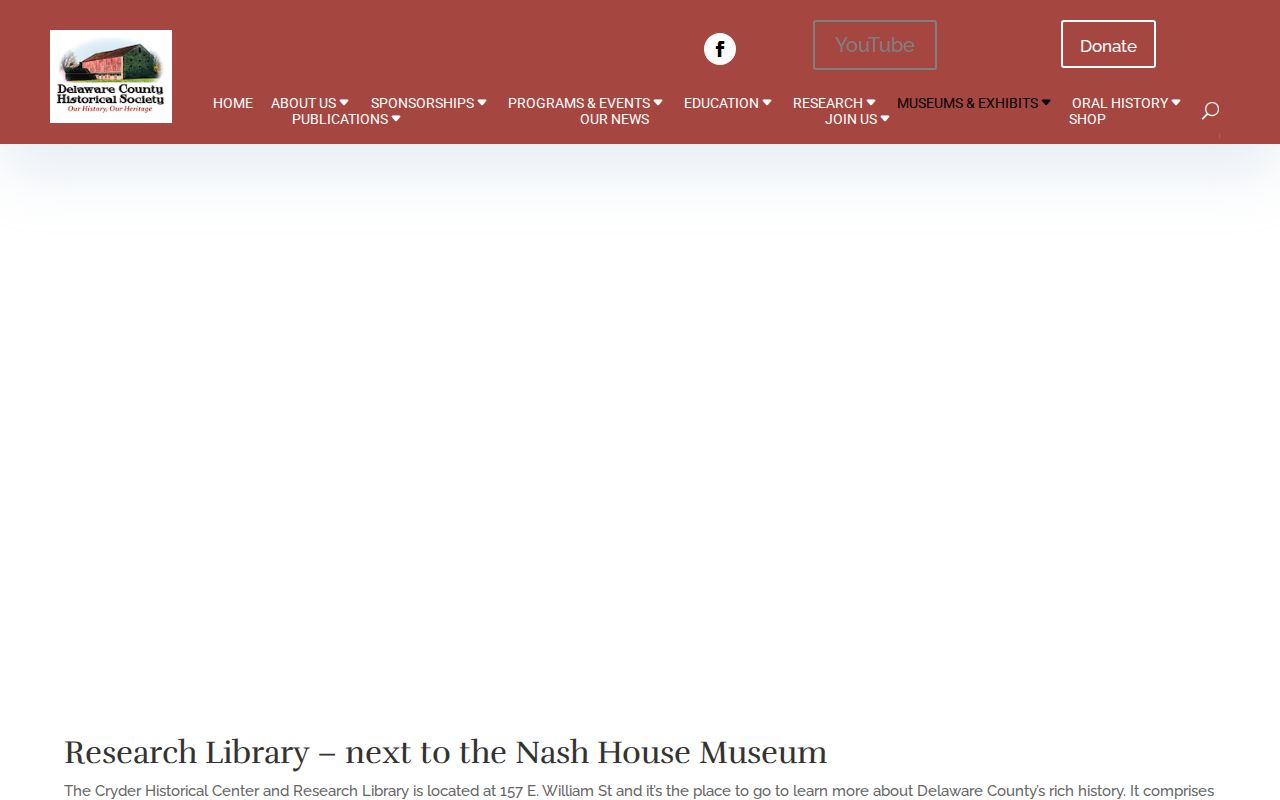
For earlier land and surname work, the Mendenhall transfer files and rural-route directories can supply a bridge that a present-day portal cannot provide by itself.
Cryder’s school yearbooks, clipping files, and newspaper material work best as companions to a precisely dated directory clue. The Delaware County History Network links this historical-society work with libraries, museums, the history park, and the County Records Center, but each item still has its own custodian and access path.
Reading a Liberty Township City Directory
The documented 1893–94 sample uses surname and given-name or initial style, and it may include an occupation, a business address, and an h notation for a home address in the city-entry portion. The printed abbreviation key should be read with the volume. It is unsafe to carry a mark from one publisher or section into another without checking its own key. A name line is an index entry, not a modern profile.
| Name | Surname followed by given name or initials in the documented sample. |
|---|---|
| Work clue | An occupation or business address may appear in a city entry. |
h notation | Home address in the documented city-entry sample. |
| Printed page | Needed with the publication year to locate the exact entry again. |
| Section context | City, county, taxpayer, and township sections make different claims. |
- Criss-cross directory
- A directory arranged by address or street rather than by surname. No verified local reverse-directory run was located, so do not assume one exists for Liberty Township.
- Householder index
- An index that points from a household name to an entry. A city entry is not automatically a full household roster.
- Abbreviation key
- The printed guide within a volume that explains its own marks. Photograph or note it before interpreting a shorthand address or status mark.
Liberty Township Place Names in Print
Historical catalogs reward a wider place-name search. Middlebury, Hall’s Corner, Unison, Hyattsville, Powell, and Delaware County can all belong in the same Liberty research trail. Unison Post Office operated from 1849 to 1860 near SR 315 and Home Road. Those terms can uncover a map, notice, atlas page, or directory passage that a modern township-only search misses.
Powell Liberty Historical Society’s resource collection provides local maps, historical books, newspaper abstracts, family material, and surname finding aids.
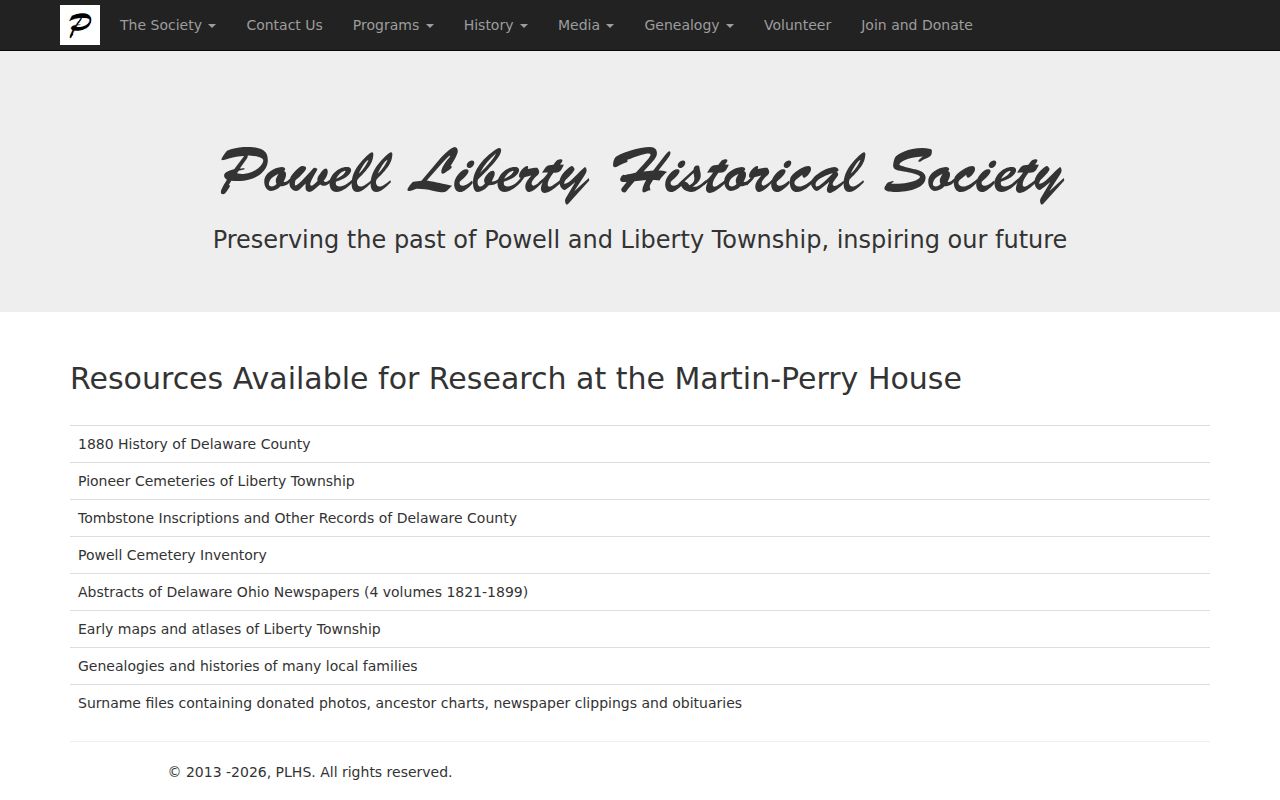
Its surname material is a holdings guide. It can direct a reader to a useful item, but it is not a resident index and should be followed to the underlying map, transcription, or original source.
Tracing Families in Liberty City Directories
For family history, work outward from a known surname or old address. Compare every available directory run near the suspected time and preserve the spelling, occupation clue, route, and home notation exactly as printed. The federal census follows a 72-year release rule, so its released schedules are historical household evidence rather than a current locator. Use the exact publication year beside the census year rather than assuming the two describe the same day.
- Locate the surname in the nearest verified county, taxpayer, or city directory run.
- Record the volume title, printed page, spelling, occupation clue, and address or route notation.
- Check the adjacent available run for a variation, a move, or a disappearance.
- Match the person to a deed or parcel legal description when a property connection is claimed.
- Compare the dated directory clue with an available census and then with an obituary, cemetery, or probate source.
A disappearance may reflect a move, a death, a change in listing practice, or a gap in the surviving run. The date and record type help distinguish those possibilities.
Keep the dates separate. A directory reflects its own compilation period, an atlas records a publication-time property label, a census records an enumerated household, and a deed may be recorded after a transfer. Liberty Township’s rural routes and later subdivision growth make that date discipline especially important.
Liberty Township Cemeteries and Endpoints
Family cemetery material, obituaries, and estate files can close a historical trail after a directory clue. The Township identifies family cemetery locations and says it has no active cemetery. Powell Liberty Historical Society also offers Powell inventory material, Liberty-Orange inscriptions, and a WPA veterans-grave registration posted in 2025. These sources help confirm a family’s historical locality, not a present address.
Powell Liberty Historical Society’s cemetery documents group several of those historical finding aids in one location.
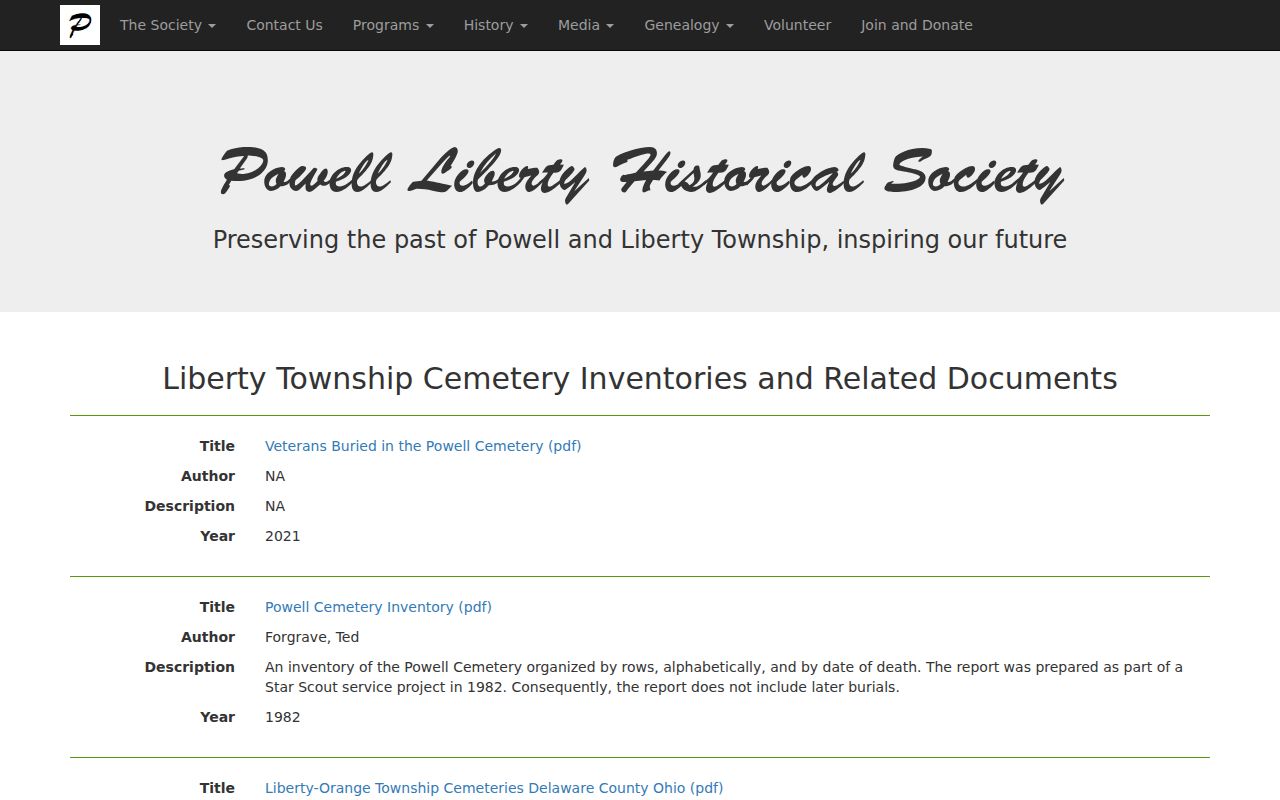
Pair a cemetery inscription or newspaper notice with the original date and another suitable record, such as a Recorder instrument or Probate estate file, when a property or family conclusion depends on it.